The Baku notebook
Build a small material library
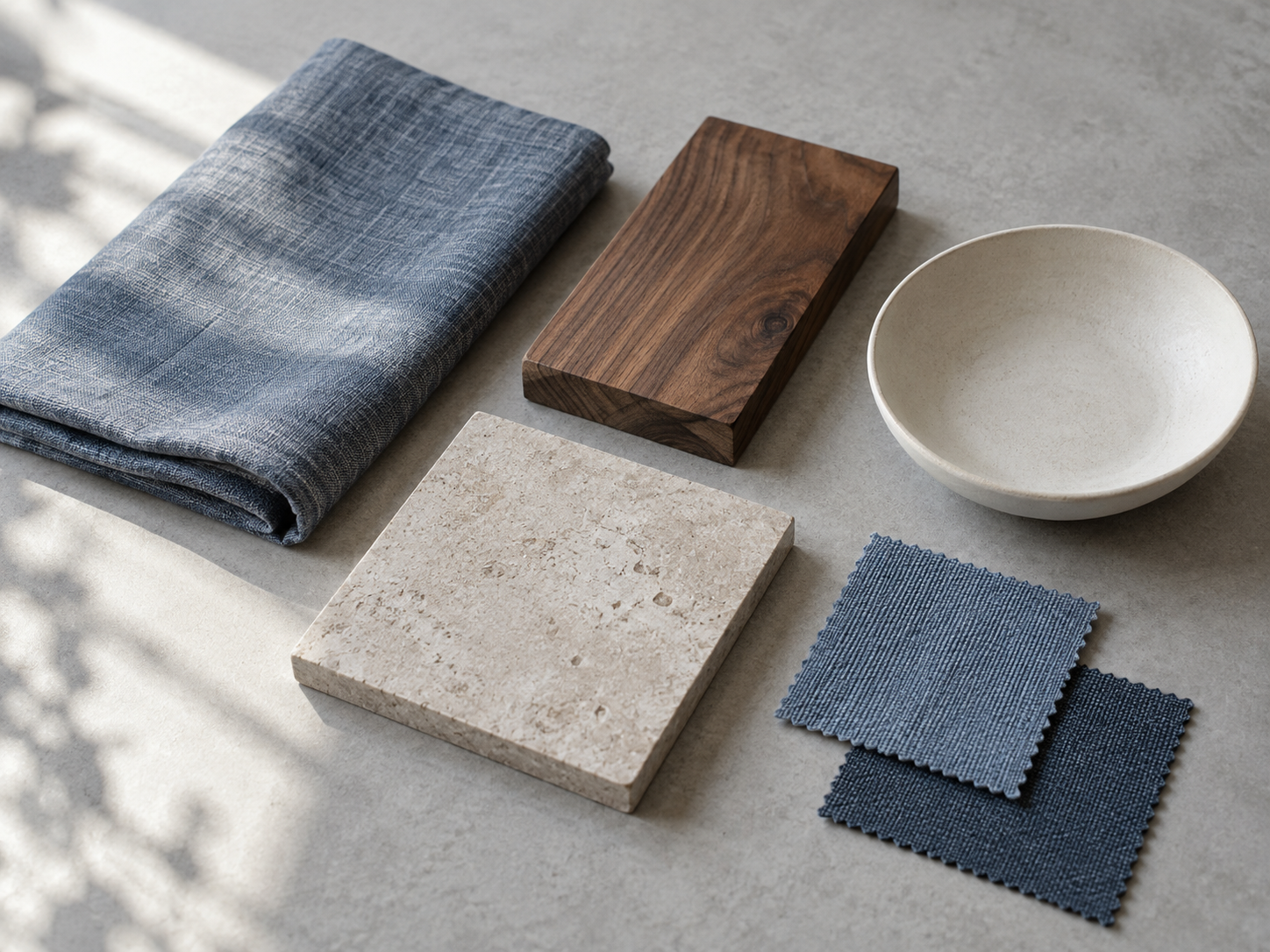
Before choosing a finish, bring a few references into the same light. A piece of fabric, a timber sample and an object you already love can form a useful guide for the rest of a room.
Use a fixed surface as the anchor
Choose something that will remain: flooring, a cabinet front or a substantial table. Look for warm, cool or neutral undertones. Your other samples can relate to this surface without copying its exact color.
Place the references together in the room itself. Shop lighting and phone screens can hide differences that become obvious beside your own floor.
Compare qualities, not just shades
Look at sheen, grain and weave. A matte bowl and a polished table may share a color but reflect light differently. This variation can provide interest without introducing another pattern.
Where existing surfaces are busy, add a quieter reference. Where everything is flat and smooth, consider a tactile element. You are balancing the whole arrangement, not collecting distinctive objects.
Ask how each finish lives
Check cleaning instructions and suitability for its intended use. Porous stone, pale upholstery and unsealed timber do not behave alike. Natural origin alone tells you little about maintenance or durability.
Ask a supplier which finish a sample represents and how it changes with use. Avoid improvised stain tests unless the supplier recommends them; a sample may not have the same treatment as the final product.
Make a connection across the room
Repeat a material where it has a practical role: a timber frame can relate to a table, or a woven shade to a storage basket. There is no need for every piece to belong to a matching set.
Include an existing object with personal history. Its wear and character may bring more to the arrangement than a new decorative purchase.
Keep the library small
Save the references that work together and note their intended locations and care requirements. Take measurements with you when shopping. A clear shortlist makes it easier to leave unsuitable pieces behind.
For environmental claims, seek specific sourcing or composition information. A general description such as natural is not enough to establish a product’s overall impact.
Sample exercise: place one fabric, one hard surface and one familiar object together. Check them in morning light and again in the evening.
Explore the color combinations ↗︎